
AGOSTO 2026 | Industry News
THE TECHNOLOGY REDEFINING MODERN AVIATION
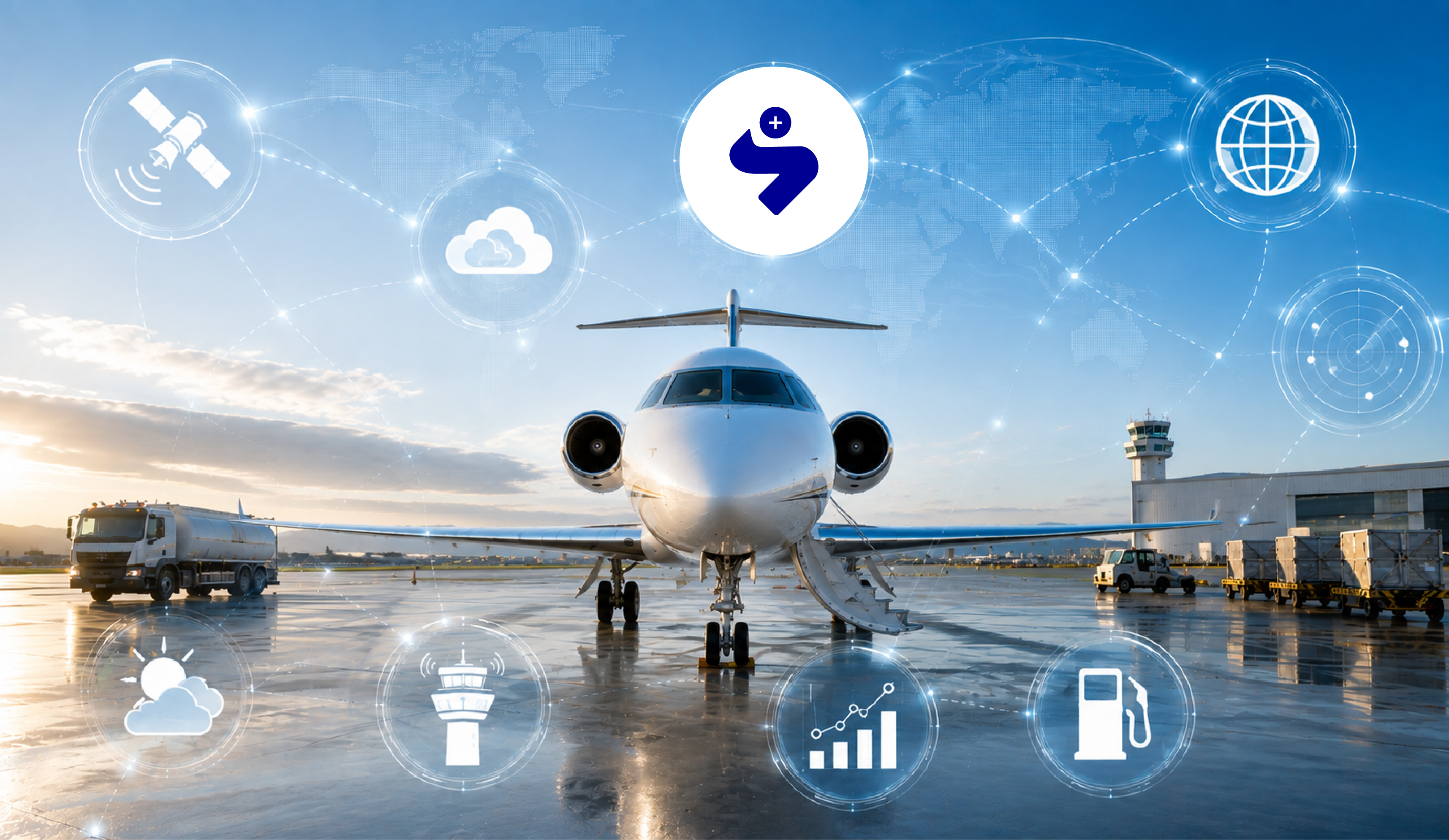
Modern aviation is no longer defined solely by more advanced aircraft, but by the technology that enables every operation to be coordinated, anticipated, and executed with greater precision. Today, operational efficiency depends on integrating information, automating processes, and making informed decisions in real time to achieve safer, faster, and more efficient flights
Digital Flight Planning and Operational Intelligence
Flight operations have evolved into digital environments that optimize every mission from the planning stage.
Today, operators rely on:
• Flight Planning Software (FPS) powered by advanced algorithms.
• Artificial Intelligence (AI) for predictive analysis.
• Integration of weather, air traffic, and fuel consumption data.
These technologies help build more efficient flight plans and anticipate operational scenarios before departure.
Real-Time Data and Global Connectivity
Operational decisions increasingly depend on immediate, accurate information.
Key technologies include:
• ADS-B (Automatic Dependent Surveillance–Broadcast) for aircraft tracking.
• SWIM (System Wide Information Management) for global information sharing.
• Real-time airport and airspace monitoring platforms.
Together, these solutions improve operational visibility and support faster, more informed decision-making.
Advanced Weather Intelligence
Weather analysis has evolved into highly accurate predictive systems.
Today's technologies include:
• AI-powered nowcasting.
• Real-time satellite imagery.
• Early warning systems for turbulence and severe weather.
Today's technologies include:
• AI-powered nowcasting.
• Real-time satellite imagery.
• Early warning systems for turbulence and severe weather.
Intelligent Fuel Management
Fuel management has become a strategic component of flight operations.
Commonly used tools include:
• Fuel optimization software.
• Digital platforms that compare fuel pricing and availability.
• Real-time fuel consumption monitoring systems.
Commonly used tools include:
• Fuel optimization software.
• Digital platforms that compare fuel pricing and availability.
• Real-time fuel consumption monitoring systems.
Digitized Ground Operations
Technology has also transformed ground handling and ramp coordination.
Today's operations utilize:
• Turnaround Management Systems.
• Mobile applications for ground handling teams.
• Real-time communication between crews, FBOs, and operators.
These solutions help reduce turnaround times and improve operational execution.
Today's operations utilize:
• Turnaround Management Systems.
• Mobile applications for ground handling teams.
• Real-time communication between crews, FBOs, and operators.
These solutions help reduce turnaround times and improve operational execution.
Operational Control and Visibility
Complete operational awareness is now possible through:
• Real-time dashboards.
• Automated reporting.
• End-to-end service traceability.
• Real-time dashboards.
• Automated reporting.
• End-to-end service traceability.
Digital Service Management
Financial and operational management tools have also evolved.
A key example is:
• Smart Fuel Cards, which allow operators to:
o Centralize payments.
o Monitor fuel consumption.
o Access detailed reporting.
o Manage services across multiple destinations.
A key example is:
• Smart Fuel Cards, which allow operators to:
o Centralize payments.
o Monitor fuel consumption.
o Access detailed reporting.
o Manage services across multiple destinations.
Emerging Technologies
The aviation industry continues advancing through innovations such as:
• eVTOLs (Electric Vertical Takeoff and Landing aircraft).
• Remote Towers.
• Blockchain for service and documentation traceability.
• Integration of 5G networks and Low Earth Orbit (LEO) satellites.
• eVTOLs (Electric Vertical Takeoff and Landing aircraft).
• Remote Towers.
• Blockchain for service and documentation traceability.
• Integration of 5G networks and Low Earth Orbit (LEO) satellites.
Turn Technology into an Operational Advantage
Technology alone does not improve an operation—the real advantage comes from how it is integrated into every stage of the flight. At S Flight Support, we help operators and flight crews turn these innovations into more efficient, connected, and reliable operations. Contact our representatives to learn how we can support your next mission.

