OPERATIONS
TECH STOP: THE LOGISTICS BEHIND REFUELING STOPS
On long routes, not every aircraft makes it in one leg. The tech stop is the calculated solution.
On transcontinental trips, not every aircraft can cover the point-to-point distance in a single leg without compromising its safety margins. The technical stop (tech stop) is a calculated operational solution that balances flight physics, weather and aircraft performance.
On transcontinental trips, not every aircraft can cover the point-to-point distance in a single leg without compromising its safety margins. The technical stop (tech stop) is a calculated operational solution that balances flight physics, weather and aircraft performance.
Definition and purpose
It's a planned logistical stop whose only purpose is fuel uplift (Jet A-1) and, on ultra-long-range routes, relieving the crew so they don't exceed their legal duty-time limits. It involves no tourist
disembarkation or commercial passenger handling.
disembarkation or commercial passenger handling.
The payload vs. range equation
A business jet's maximum range is dynamic. Increasing payload — more passengers and baggage — raises the zero fuel weight (ZFW) and reduces the fuel the airframe can carry without exceeding the maximum take-off weight (MTOW). Add headwinds or the jet stream, and if the estimated burn erodes the legal reserves, dispatch schedules a tech stop.
Ramp times and quick turn
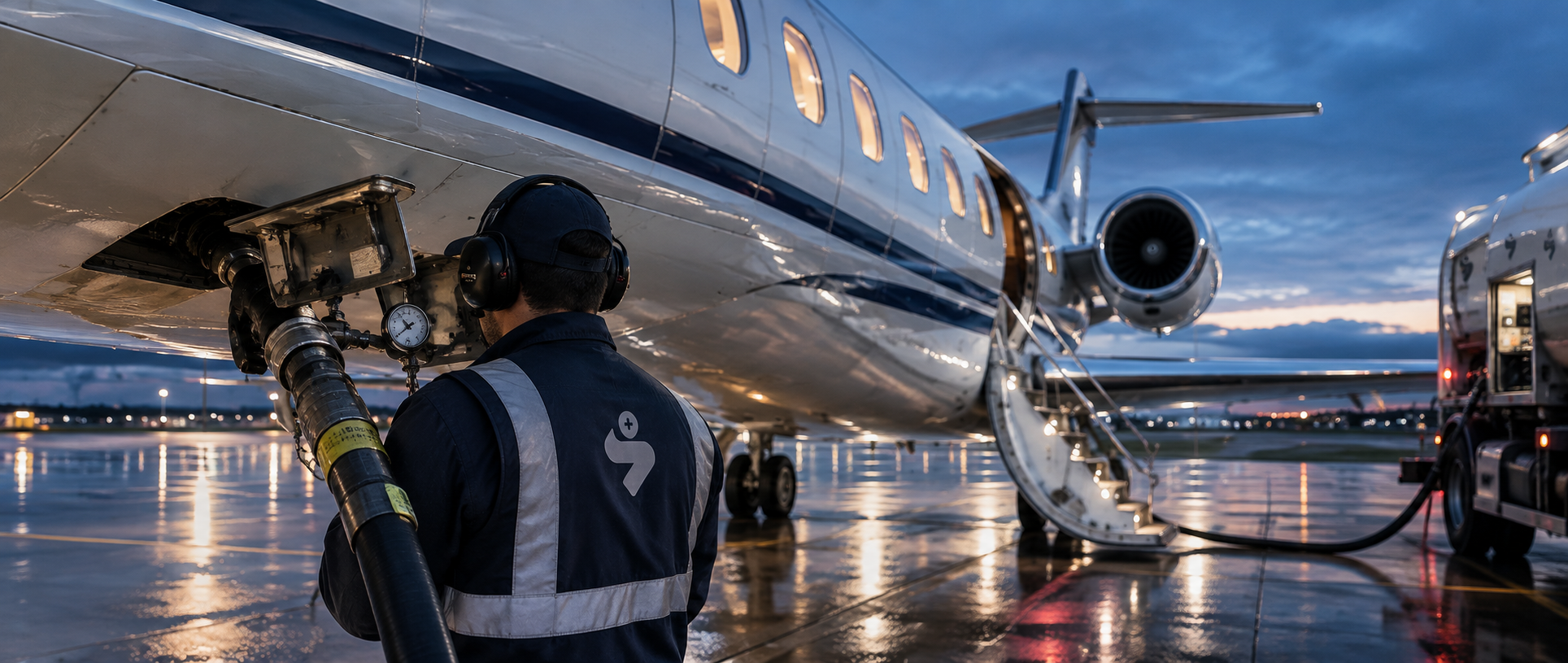
An efficient tech stop is coordinated as a quick turn (30 to 45 minutes on the ramp). To achieve it, the flight-support provider positions the fuel truck ahead of time with an active Fuel Release, secures ramp services (GPU, lavatory) and activates the flight plan for the next leg with ATC.
Choosing the intermediate airport
Preference goes to aerodromes along the great-circle route, with adequate runway length and strength (PCN), instrument approach procedures (ILS/RNAV), 24/7 FBOs and customs/immigration transit facilities to avoid administrative delays.
Frequently Asked Questions
Is disembarking mandatory during a tech stop?
It depends on local rules. Many FBOs allow refueling with passengers on board, provided the main door stays open, the airstair is deployed and fire equipment is in position. If local regulation forbids it, passengers wait in the FBO lounge.
Are customs and immigration (CIQ) required?
It varies by jurisdiction. Some countries allow sterile-transit stops without opening the aircraft door. However, in territories such as the United States or Mexico, every first landing requires clearing Customs and Immigration (CIQ) and filing the APIS manifest in advance, even if the only goal is to take on fuel.
Why can en-route winds force an unplanned stop?
In winter, the jet stream produces strong headwinds that reduce ground speed. The longer flight time raises hourly burn and can make a stop necessary that wasn't needed in summer.
What's the difference between a tech stop and an alternate airport?
The tech stop is planned into the itinerary to refuel. The alternate is a backup runway in the flight plan that the aircraft only diverts to if the destination becomes unusable due to weather or a runway closure.
Can a tech stop be avoided by reducing baggage?
Yes. Reducing passenger and baggage weight lets the aircraft depart with more fuel without exceeding MTOW, allowing longer legs without intermediate stops.
How does a tech stop affect the crew?
It adds take-off and landing cycles and workload. If the day approaches the Flight Duty Period limit, dispatch can arrange a crew change at the stop.

