TECHNICAL
JET A-1 AND AVGAS 100LL: TWO FUELS, TWO WORLDS
In aviation, the word “fuel” says nothing on its own. There are two chemical families that never mix, and confusing them on the ramp ranks among the most dangerous errors made on the ground. The good news is that the difference takes a minute to grasp; the bad news is that the consequences of ignoring it are unforgiving.
Jet A-1: what powers the turbines
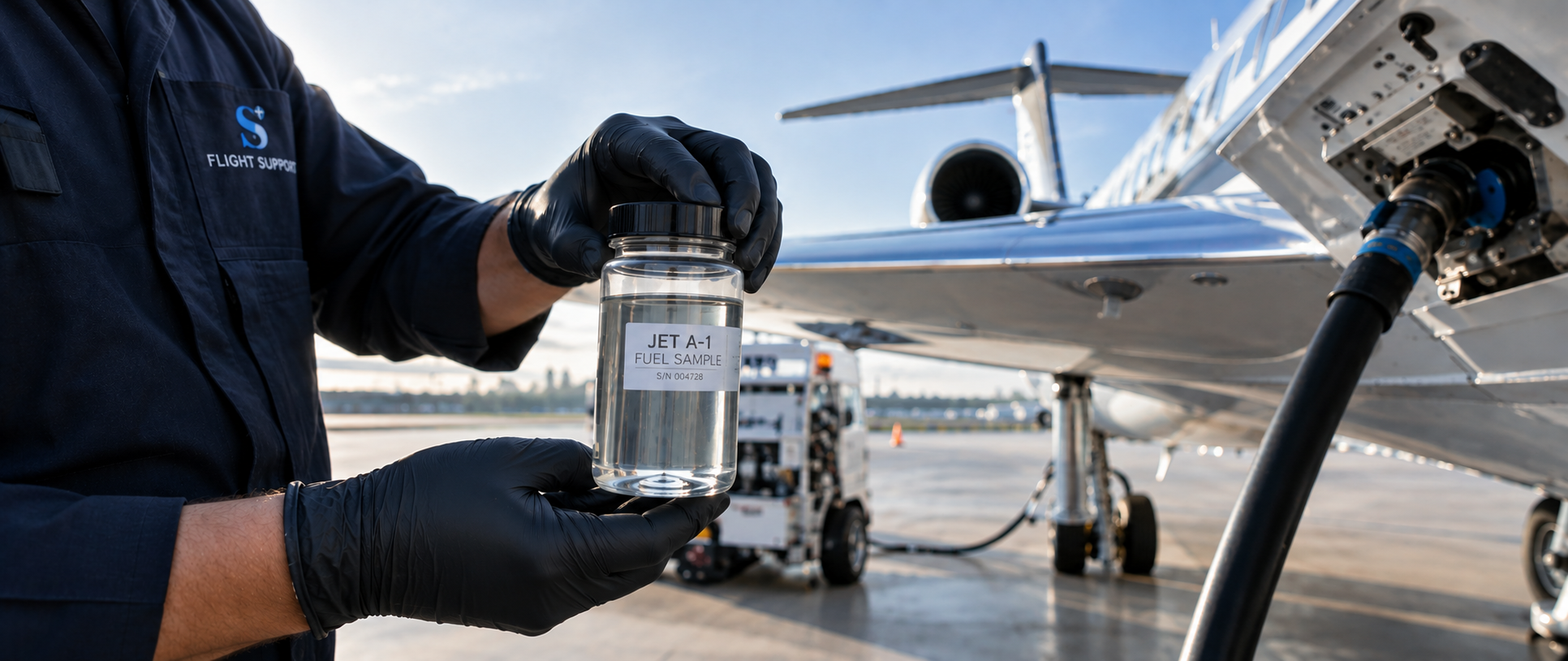
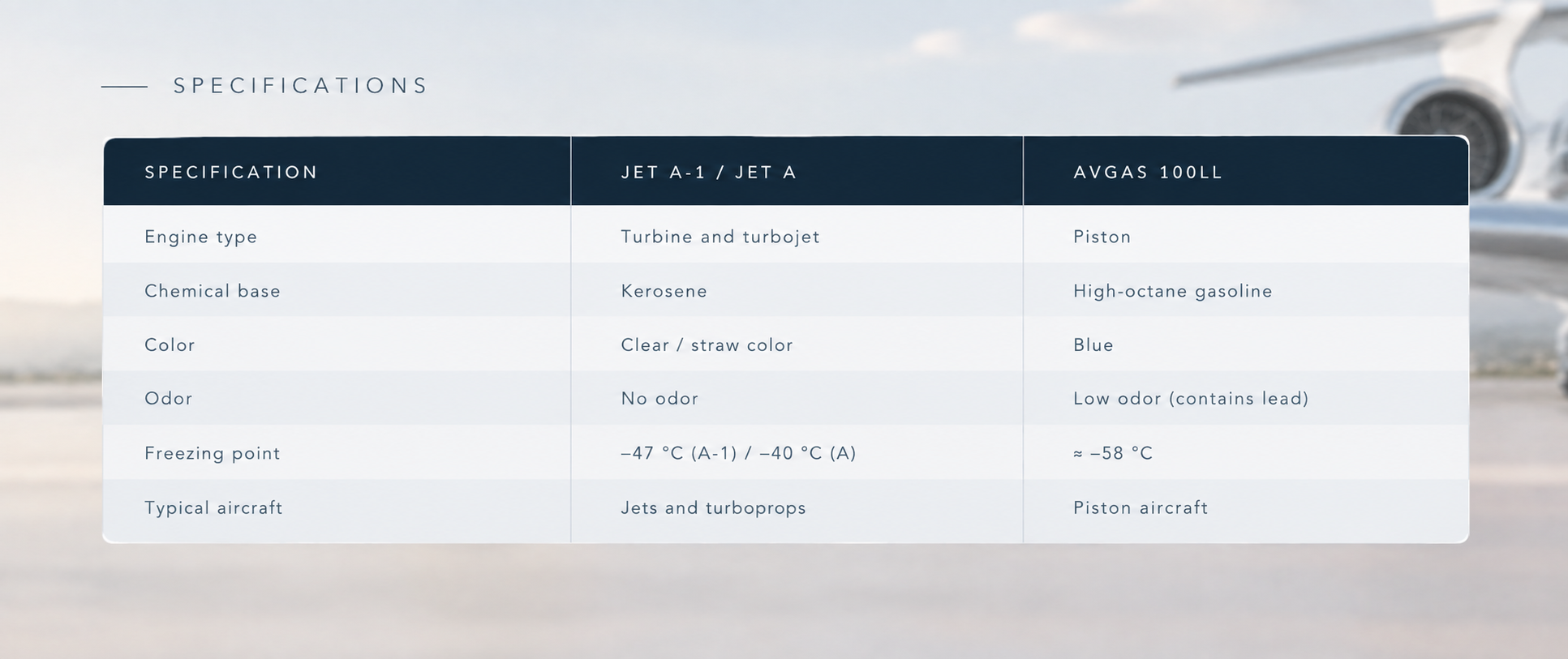
It's a high-purity refined kerosene that feeds jet (turbofan) and turboprop engines, the backbone of business aviation. It's built for the extreme cold of altitude: it stays fluid down to −47 °C, unlike standard U.S. Jet A, which is limited to −40 °C. To the eye it's clear, a straw-colored, almost transparent liquid.
Avgas 100LL: the gasoline of piston engines
Avgas (short for aviation gasoline) powers internal-combustion piston engines, typical of light general aviation. The “100” is its octane rating; “LL” means low lead. Because it still needs tetraethyl lead to prevent detonation inside the cylinder, it's deliberately dyed blue so it can be recognized at a glance during the visual check.
The mistake every ramp fears
Of the two possible mix-ups, putting Jet A-1 into a piston engine is the more dangerous — and the most treacherous part is that it gives no warning. Kerosene detonates in an engine designed for gasoline, yet the engine can start and run for a while, sometimes past takeoff, before losing power. The reverse, Avgas in a turbine, tends to be less critical, since many turbines tolerate it within limits; there the harm comes from the lead, which fouls and wears the hot section over time.
That's why the industry doesn't rely on eyesight alone. Jet A-1 nozzles, the so-called J-spout, are wider, built so they physically won't fit into the filler of an Avgas aircraft, and before every flight crews run the fuel drain (sump test) and a visual check. They're barriers against a human error with enormous consequences.
And because many regional airports can't guarantee both types, confirming which fuel is available and arranging the Fuel Release before landing isn't paperwork, it's a safety decision.
Frequently Asked Questions
What happens if the wrong fuel is loaded?
A serious engine failure. If the error is caught on the ground, the aircraft is taken out of service at once: tanks are drained, lines purged and engines inspected before any flight is cleared.
Why is Avgas 100LL blue?
The color identifies the fuel grade. 100LL is blue; 100/130, with more lead, is green; the old 80 was red; and 82UL, which is unleaded, is purple. The dye prevents confusing grades and, above all, loading Jet A-1 by mistake, it's nearly colorless.
Does SAF replace Jet A-1?
It doesn't replace it, it blends with it. Sustainable aviation fuel is a “drop-in”: it combines with conventional Jet A-1 (today up to 50%), meets the same specifications and works in the same engines and systems without modification.
Do all airports carry both fuels?
No. Many FBOs and smaller airports stock only one. Confirming availability and coordinating the uplift before arrival is part of essential light support.

