OPERATIONS · SAFETY
DE-ICING: WHY YOUR FLIGHT MAY WAIT IN WINTER
A layer of ice on the wing isn't cosmetic. It changes how the aircraft flies, which is why, sometimes, you wait.
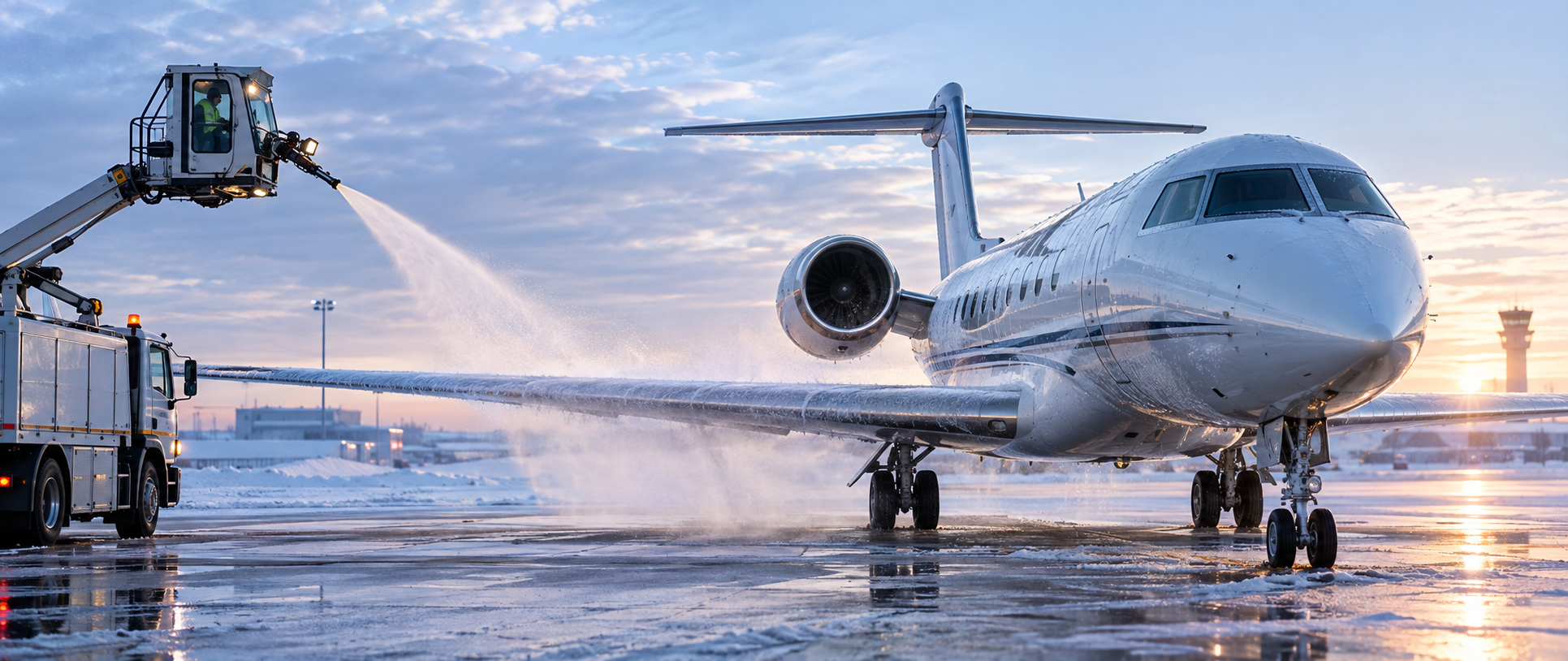
If you fly in winter across the United States or from a high-altitude airport, you may see a crew spraying fluid over the wings before departure. That's de-icing, and though it delays departure by a few minutes, it's one of the most important things happening that day.
The reason is pure airflow. A layer of snow, frost or ice (even a thin one) breaks the flow over the wing and robs it of lift exactly when it's needed most, on takeoff. That's why the rule allows no nuance: the aircraft departs with its critical surfaces clean, no exceptions.
The process has two parts. First a heated fluid is sprayed to melt and wash off the ice (de-icing fluid). If it keeps snowing or the aircraft will wait its turn, a second fluid is applied to protect it a
while longer (anti-icing). And that “while” has a name and a clock: it's called holdover time. If the aircraft doesn't take off within that window, it all starts over.
For the passenger it's a few minutes on the ramp watching the crew work. They feel long, true. But it's exactly what you want to happen before rolling toward an icy runway.
Frequently Asked Questions
Why can't you take off with a little ice?
Because even a thin layer alters the wing's aerodynamics and reduces lift. The rule requires clean critical surfaces.
How long does de-icing take?
Usually a few minutes, though on busy days there can be a line for the de-icing equipment.
What is “holdover time”?
The time the anti-icing fluid protects the aircraft before takeoff. If it runs out, the treatment is repeated.
Does this only apply with snow?
No. Also with frost or ice from freezing dew (even without snowfall) and at cold high-altitude airports.
Can it be avoided?
Sometimes, by scheduling departure outside the worst conditions; but when there's contamination on the surfaces, de-icing is mandatory.

